

As freezing temperatures approach, it’s vital to safeguard your home and its systems. Taking preventative measures now can help you avoid costly repairs and ensure your home remains a safe haven during the cold weather. Here are practical tips to prepare and what to do if you encounter issues.
Before Freezing Weather Arrives
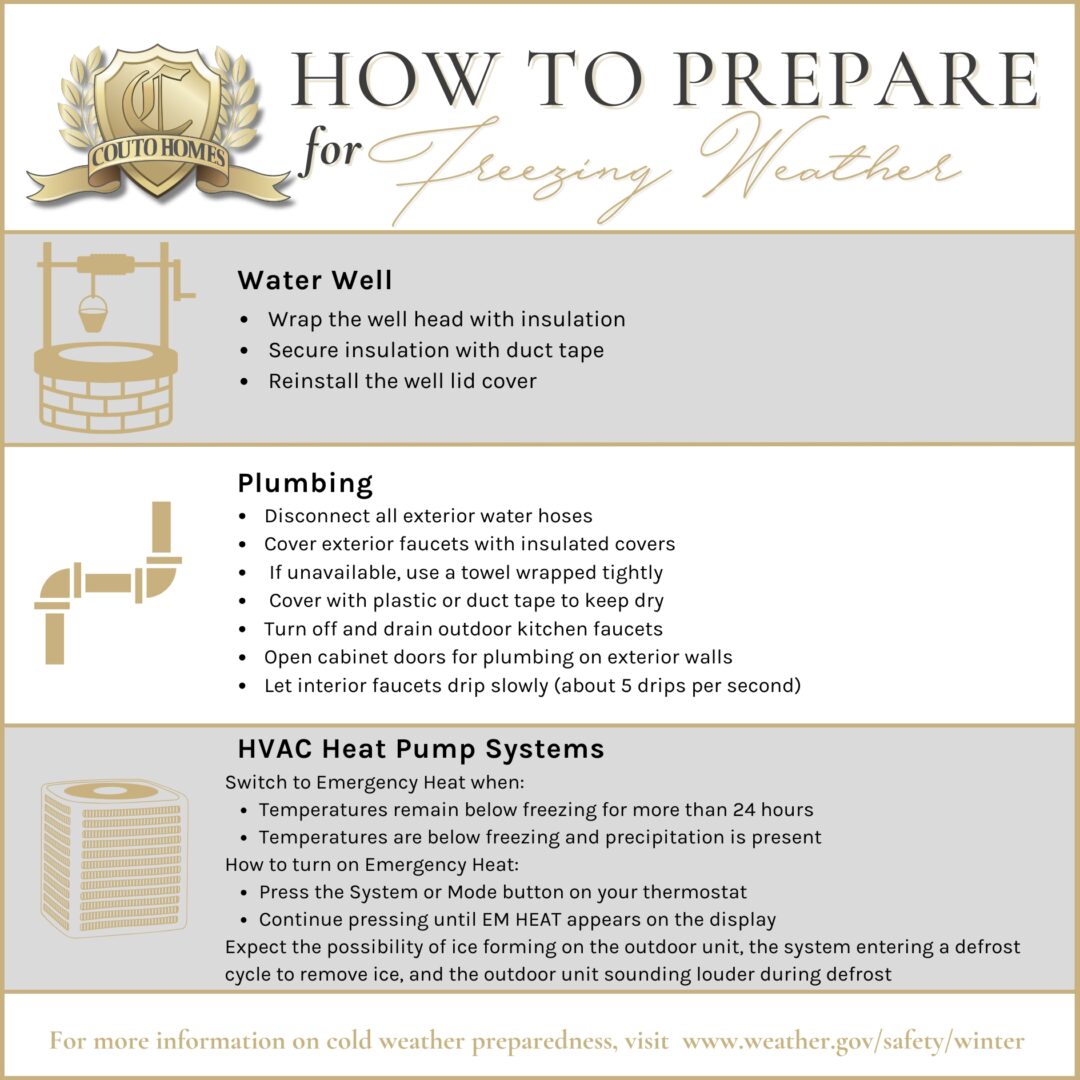
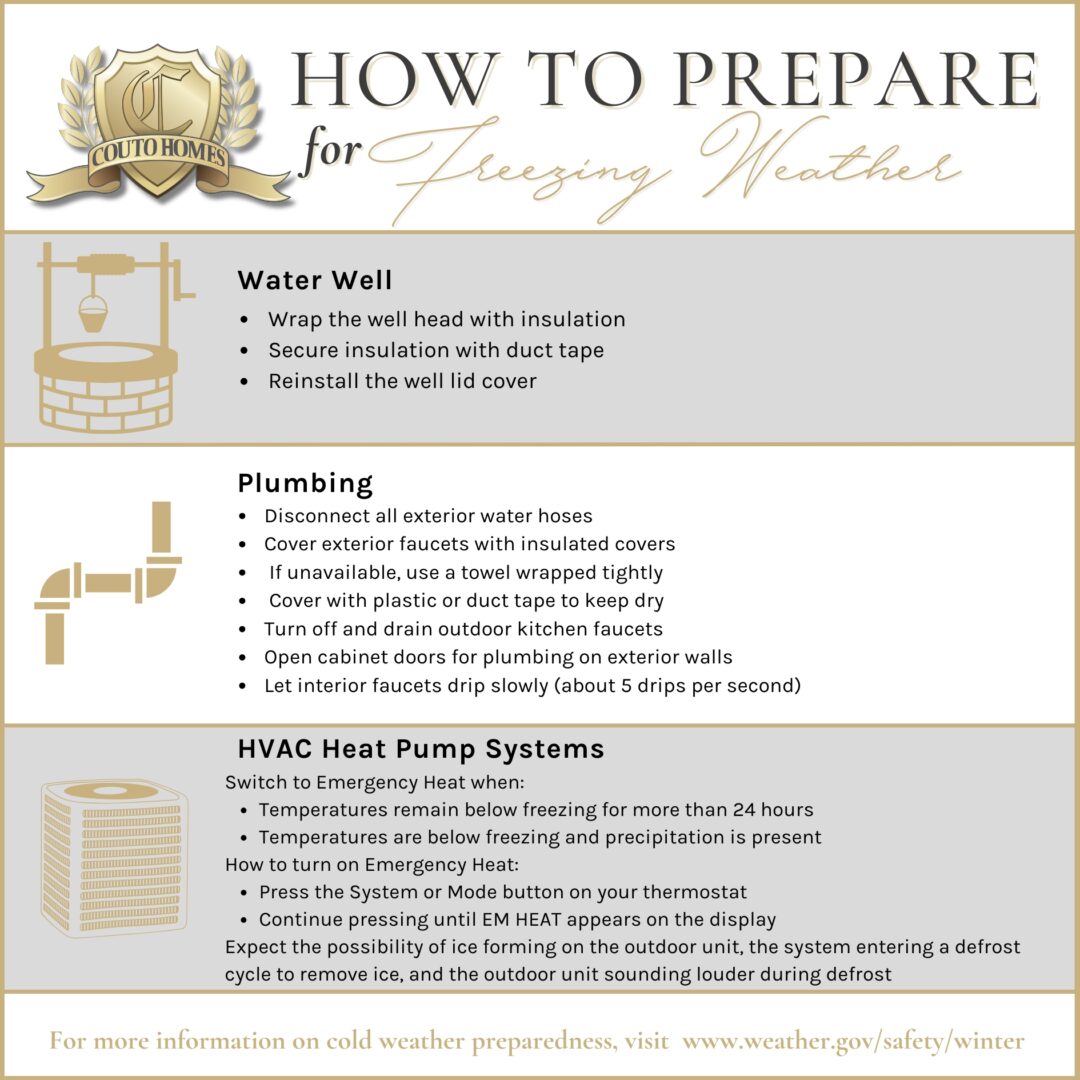
Protect Outdoor Faucets:
- Disconnect water hoses.
- Cover outdoor faucets with insulated covers or tightly wrapped towels secured with plastic bags or duct tape.
Insulate Well Heads (if applicable):
- Wrap the well head with insulation and secure it with duct tape.
- Replace the cover lid after insulating.
Prepare Indoor Plumbing:
- Open cabinet doors under sinks, especially if plumbing is near exterior walls.
- Leave faucets dripping at a steady rate (approximately 5 drips per second).
Prepare Irrigation Systems:
- Locate the green circular box next to the RPZ
- Remove the lid to the green box and turn the valve inside so it is perpendicular to the pipe.
- Set the irrigation system dial to “manual” mode, then turn the dial to “run” after the screen flashes three times. This will purge water from the system.
During Freezing Weather
Emergency Heat Mode:
- Set your thermostat to “EM HEAT” to prevent issues with heat pumps.
- Note that ice on heat pumps is normal; they are designed with a defrost cycle to handle freezing conditions. Your system may sound louder than usual when defrosting.
Monitor Your Home:
- Regularly check ceilings, walls, and floors for signs of leaks.
- Stay alert for unusual noises or changes in your heating system.
Steps to Take if You Experience Plumbing Issues
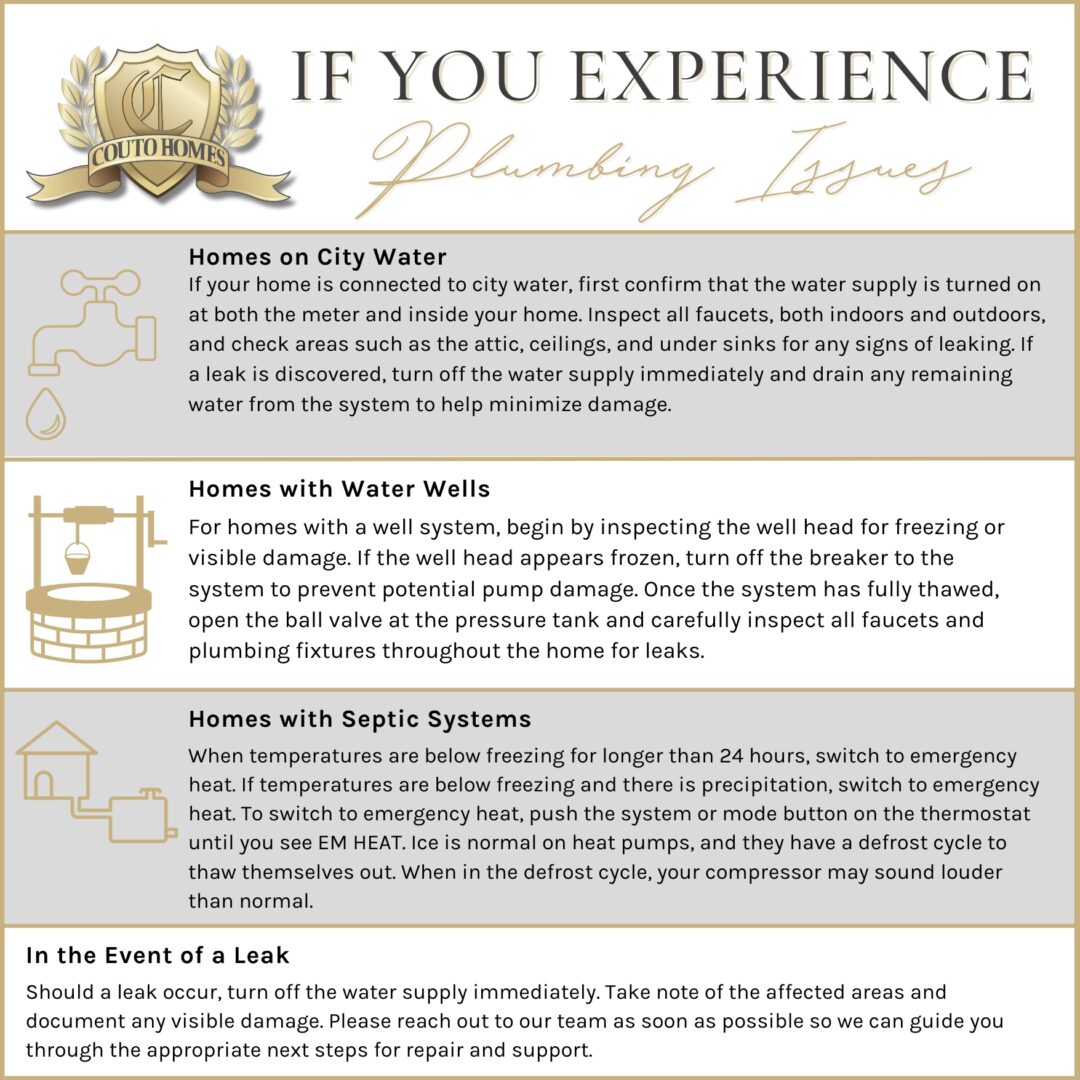
Homes on City Water:
- Ensure your water supply is turned on at the meter and inside your home.
- Inspect all faucets, both inside and outside.
- Check the attic, ceilings, and under sinks for leaks.
- If a leak is found:
- Turn off the water supply immediately.
- Drain remaining water from the system.
Homes with Water Wells:
- Inspect the well head for freezing or visible damage.
- If frozen, turn off the breaker to prevent pump damage.
- Once thawed, open the ball valve at the pressure tank and inspect faucets and plumbing fixtures for leaks.
Homes with Septic Systems:
- Inspect septic spray heads and remove any ice buildup.
- Test the system by manually activating the spray.
- If the spray looks abnormal or doesn’t work, contact a septic professional.
In Case of a Leak:
- Turn off the water supply.
- Create a detailed list of affected areas and note any damage.
- Contact us so we can guide you on next steps for repairs.
Stay Safe and Prepared
If you encounter issues or have questions about preparing your home, please don’t hesitate to contact us. Your safety and the integrity of your home are our top priorities.

 Luxury Series
  Executive Series
  Signature Series
  Classic Series